Introduction
Home mechanical ventilation (HMV) has established itself over the past four decades as the treatment of choice for chronic hypercapnic respiratory failure in patients with severe chronic obstructive pulmonary disease (COPD), obesity hypoventilation syndrome (OHS), neuromuscular diseases (NMD), and other causes of nocturnal hypoventilation.1,2 The prevalence of HMV has grown steadily: European estimates from two decades ago reported 6.6 users/100,000 inhabitants,3 a figure now widely exceeded owing to an ageing population, increasing prevalence of morbid obesity, and growing evidence for the benefit of high-intensity non-invasive ventilation (NIV) in COPD.
Since the first volumetric ventilators of the 1980s (Fig. 1), home ventilators have undergone extraordinary technical development. One of the most significant advances has been the incorporation of built-in software (BIS) capable of recording, processing, and presenting to the clinician a large quantity of information about the ventilator’s performance during nocturnal use: adherence, leak estimation, tidal volume, minute ventilation (MV), respiratory rate, percentage of patient-triggered and device-triggered cycles, and residual apnea-hypopnea index (AHI). This information, initially accessible only by manual download of memory cards during hospital or home visits, is now transmitted automatically to cloud platforms that allow remote follow-up in near real time.4
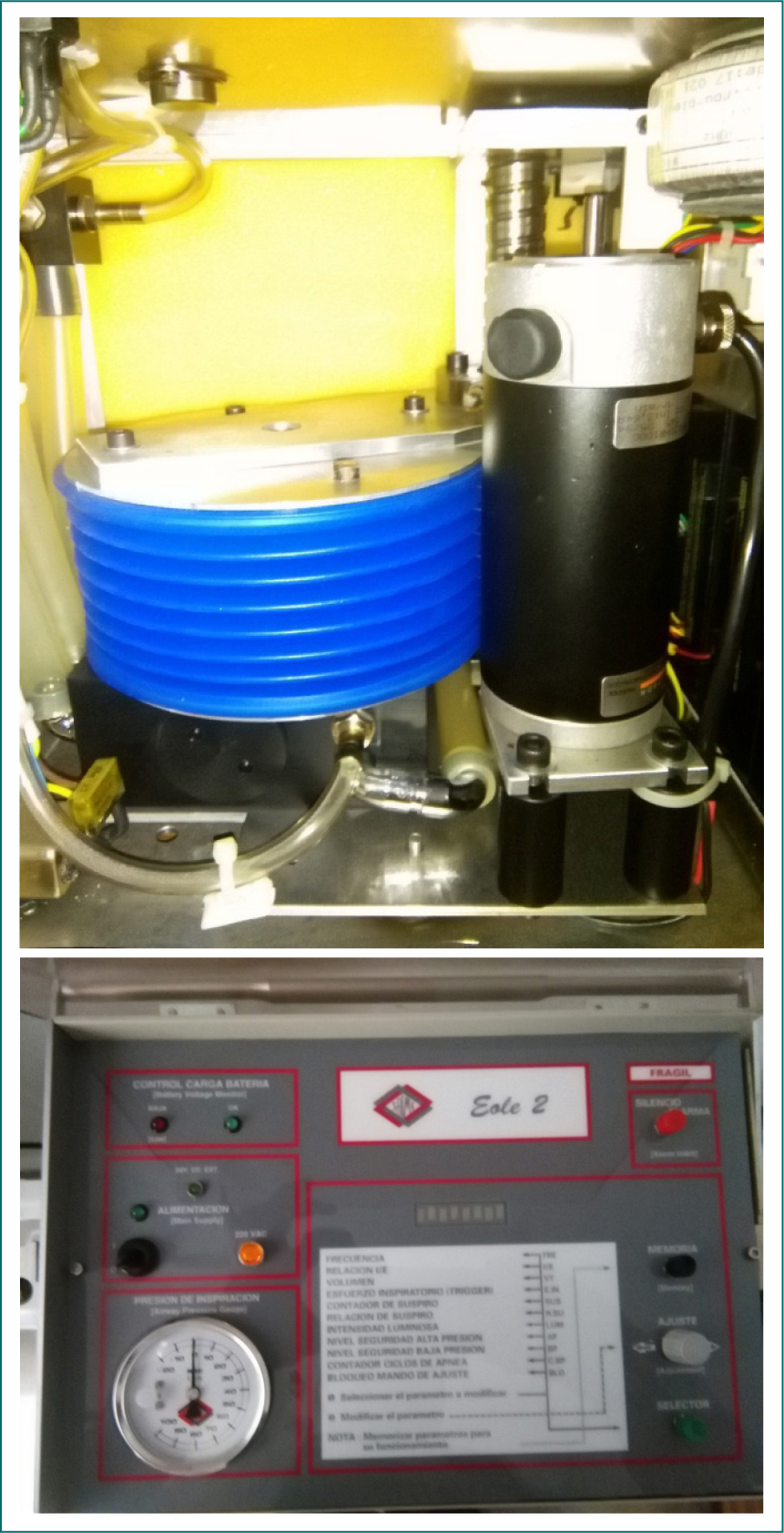
Figure 1. Volumetric ventilator (Eole 2, Saime, France) from the late 1990s/early 2000s. Note the few electronic components and the analogue pressure gauge as the sole monitoring element.
The aim of this review is to synthesize current knowledge on the role of BIS in HMV, to analyse its clinical applications – including emerging predictive uses – to discuss its most relevant limitations, to compare it with telemonitoring strategies, and to define the features that ideal software should possess. Future directions regarding artificial intelligence (AI), integration of additional signals, and regulatory and standardization perspectives are also proposed.
How are ventilator data recorded and presented?
Historical development and technical architecture
The first home ventilators incorporated only a clock that counted hours of use and, at most, an analogue indicator of one of the control variables (pressure or flow) (Fig. 1). From the 1990s onwards, the development of miniaturized pressure and flow monitoring systems, together with the advent of electronic solutions, made it possible to measure respiratory flow cycle by cycle and derive estimates of tidal volume, MV, respiratory rate, and leaks. The first series exploring these options was published in the 2000s,5 alongside the first pulse oximeters coupled to the ventilator record, which added arterial oxygen saturation (SpO2) to the device display. Manufacturers such as ResMed (with ResScan® software) and Philips Respironics (with EncorePro and Direct View®) developed desktop platforms enabling the download and visualization of these signals as detailed waveforms and summary statistics.
Modern home ventilators are built around the integration of a pneumatic block, a set of sensors, and high-performance microelectronics that allow:
– High-frequency data capture (typically around 100 Hz) to adapt the turbine response
– Storage of these data at sampling frequencies appropriate to the native frequencies of the recorded signals (flow and pressure)
– Processing of the dedicated variables simultaneously/“online” and for subsequent review
– Storage and transmission of these variables.
Figure 2 illustrates the schematic electronic architecture of a home ventilator and the integration of all these stages.
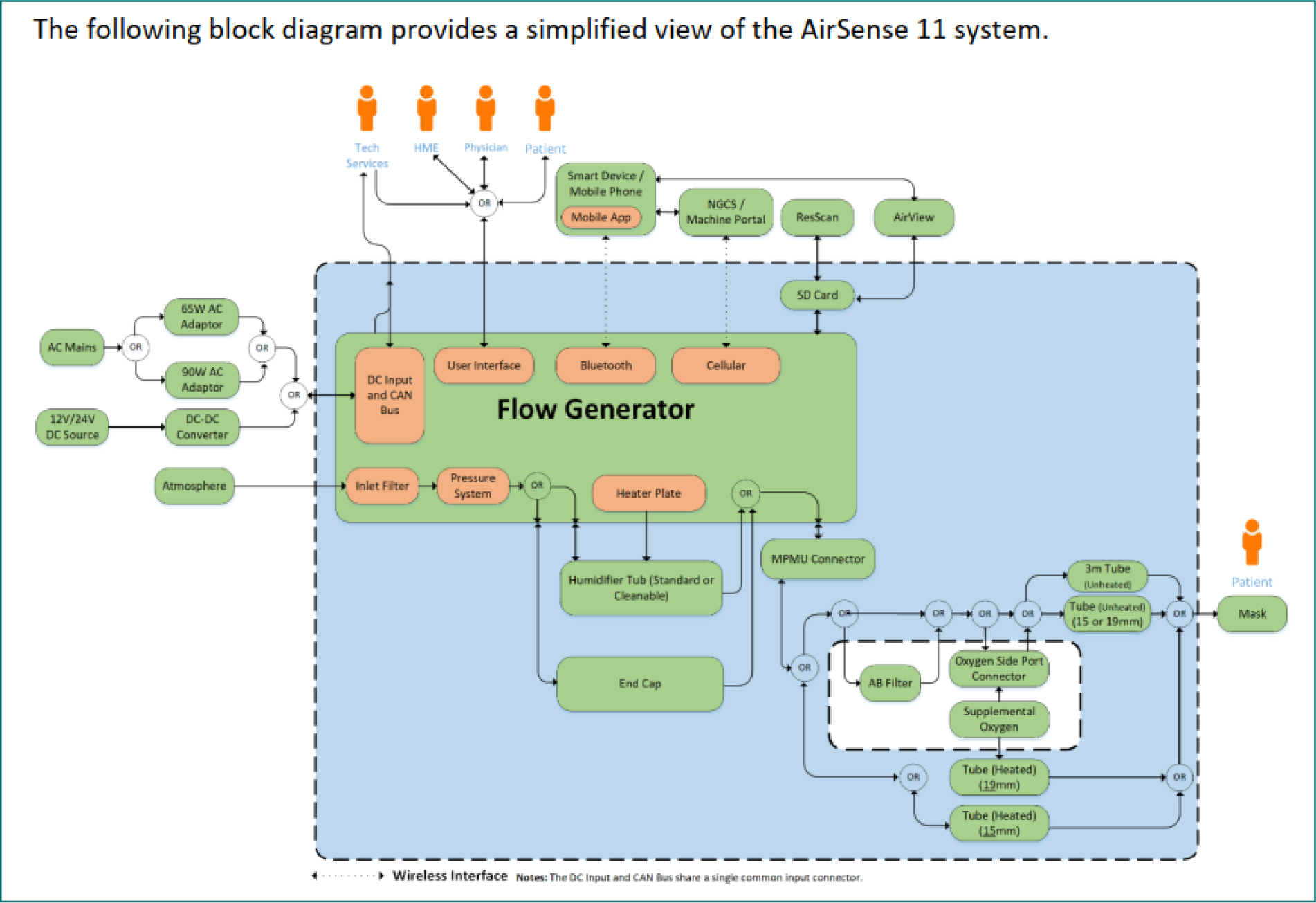
Figure 2. System diagram of a modern ventilator (AirSense 11, ResMed, Australia). The close interrelationship between pneumatic components, sensors, and information transmission systems (SD cards, bluetooth, mobile networks) demonstrates the change in design, orientated towards managing the multiple data that can be recorded (adapted from ResMed. AirSense 11 Series Service Manual. Product number 398011).6
The current architecture of the ventilator record comprises three levels of information: (1) daily or nocturnal summary statistics (mean, median, percentiles); (2) longitudinal trend charts (days, weeks, months) of the main parameters; and (3) detailed breath-by-breath pressure, flow, leak, and volume waveforms, enabling an analysis analogous to that of respiratory polygraphy. Integration of additional signals – SpO2, transcutaneous capnography (PtcCO2) and thoraco-abdominal belts – is technically feasible in some devices, although their availability remains limited.
Parameters provided by the BIS
Table 1 summarizes the main parameters offered by the BIS of modern ventilators, their clinical utility, and their main limitations. In summary, the most relevant are:
Table 1. Main parameters provided by BIS monitoring in modern ventilators, their clinical utility, and their main limitations
| Parameter | Clinical utility | Main limitations |
|---|---|---|
| Adherence (ventilator use) | Most reliable BIS parameter; estimates hours of use and use pattern, helping identify fragmented use, intolerance, leaks, comorbidities, or symptomatic asynchronies. | Hours alone do not reflect quality of ventilation; fragmented use may be more informative than total duration. |
| Leaks | Essential for assessing interface performance and NIV effectiveness; median and 95th percentile leaks help interpret impact on hypoventilation, discomfort, and sleep fragmentation. | Leak estimation is prone to error with asymmetric or variable leaks and differs across manufacturers and algorithms. |
| Tidal volume and minute ventilation | Useful for follow-up, and for detecting trends in ventilation adequacy. | Absolute values are leak-dependent and affected by circuit mode; trends are more reliable than single values. |
| Respiratory rate and percentage of spontaneous cycles | Helpful for assessing patient-ventilator synchrony and may provide early warning of COPD exacerbations. | Can be distorted by autotriggering or ineffective efforts, so the displayed rate may not reflect the patient’s true respiratory pattern. |
| Apnoea-hypopnoea index (AHI) | Screens for residual obstructive events; values above 10 events/hour suggest need for further adjustment. | Definitions and detection algorithms vary by manufacturer; leaks can cause over- or underestimation, and central/obstructive classification is poorly validated. |
| Inspiratory time and I:E ratio | Useful for adjusting cycling criteria and identifying I:E inversions. | These parameters are not universally displayed and may be difficult to interpret without waveform review. |
| Breath-by-breath pressure, flow, leak, and volume waveforms | Allow detailed analysis of obstruction patterns, residual respiratory events, and patient-ventilator asynchronies. | Require expert interpretation and are limited by sampling frequency, platform heterogeneity, and incomplete access to raw data. Not available in telemonitoring. |
| Signal integration with SpO2, TcPCO2, and thoraco-abdominal belts | Improves non-invasive evaluation of NIV efficacy and helps distinguish central from obstructive events. | Availability remains limited across devices; integration is inconsistent between manufacturers. |
Adherence (ventilator use): recorded by the device’s internal clock, this is the most reliable BIS parameter. It is expressed as the mean hours of use per night and allows analysis of both total duration and pattern (fragmented vs. continuous use). Fragmented use suggests intolerance, leaks, comorbidities, or symptomatic asynchronies (Fig. 3).
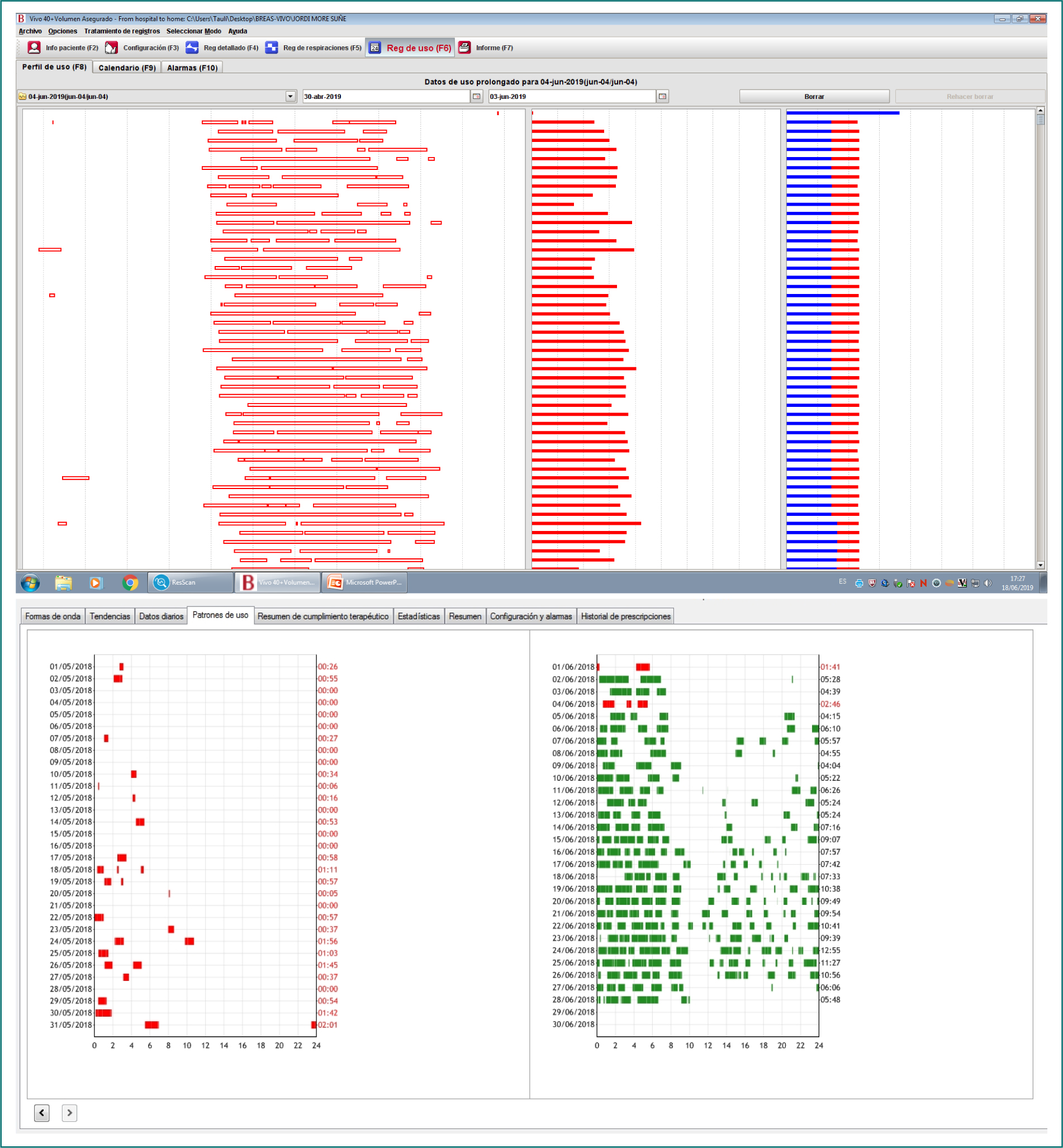
Figure 3. Adherence. In the upper image, a fragmented use pattern can be observed, yet one that exceeds the 4 h arbitrarily established as the minimum desirable threshold. In the lower image, the patient progresses from not using the ventilator to using it in a fragmented manner, reflecting neither comfortable use nor clinical benefit in this pattern. The pattern, and not merely the hours of use, provides excellent information on the quality of ventilation.
Leaks: estimated from the total flow generated by the turbine and the manufacturer’s proprietary algorithms. They may be expressed as intentional + unintentional (total leaks) or unintentional only. Their interpretation requires knowledge of which method each device uses.
Tidal volume (Vt) and MV: Vt is a common clinical target (6–8 mL/kg ideal body weight), but its estimation is dependent on leaks7 and the circuit mode used.8 Vt trends are more informative than absolute values and should not exclusively guide the titration of support levels. It is particularly relevant when automated “hybrid” ventilatory modes are used.
Respiratory rate and percentage of spontaneous cycles: these allow evaluation of patient-ventilator synchrony. A high percentage of controlled cycles may reflect capture by the back-up rate or ineffective patient effort. These parameters can occasionally be distorted by autotriggering phenomena or ineffective efforts, dissociating the patient’s true respiratory rate from the rate indicated by the ventilator (Fig. 4).
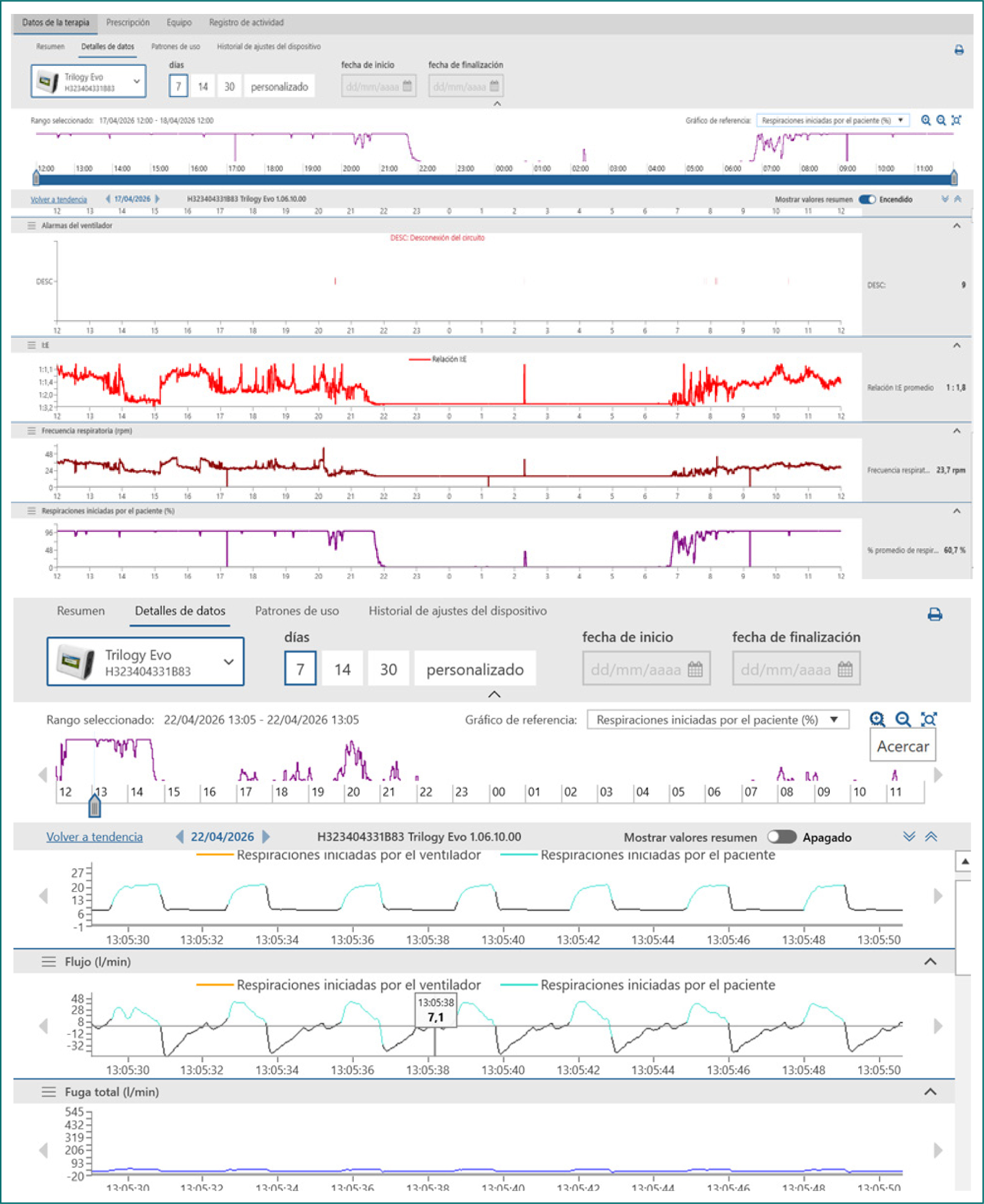
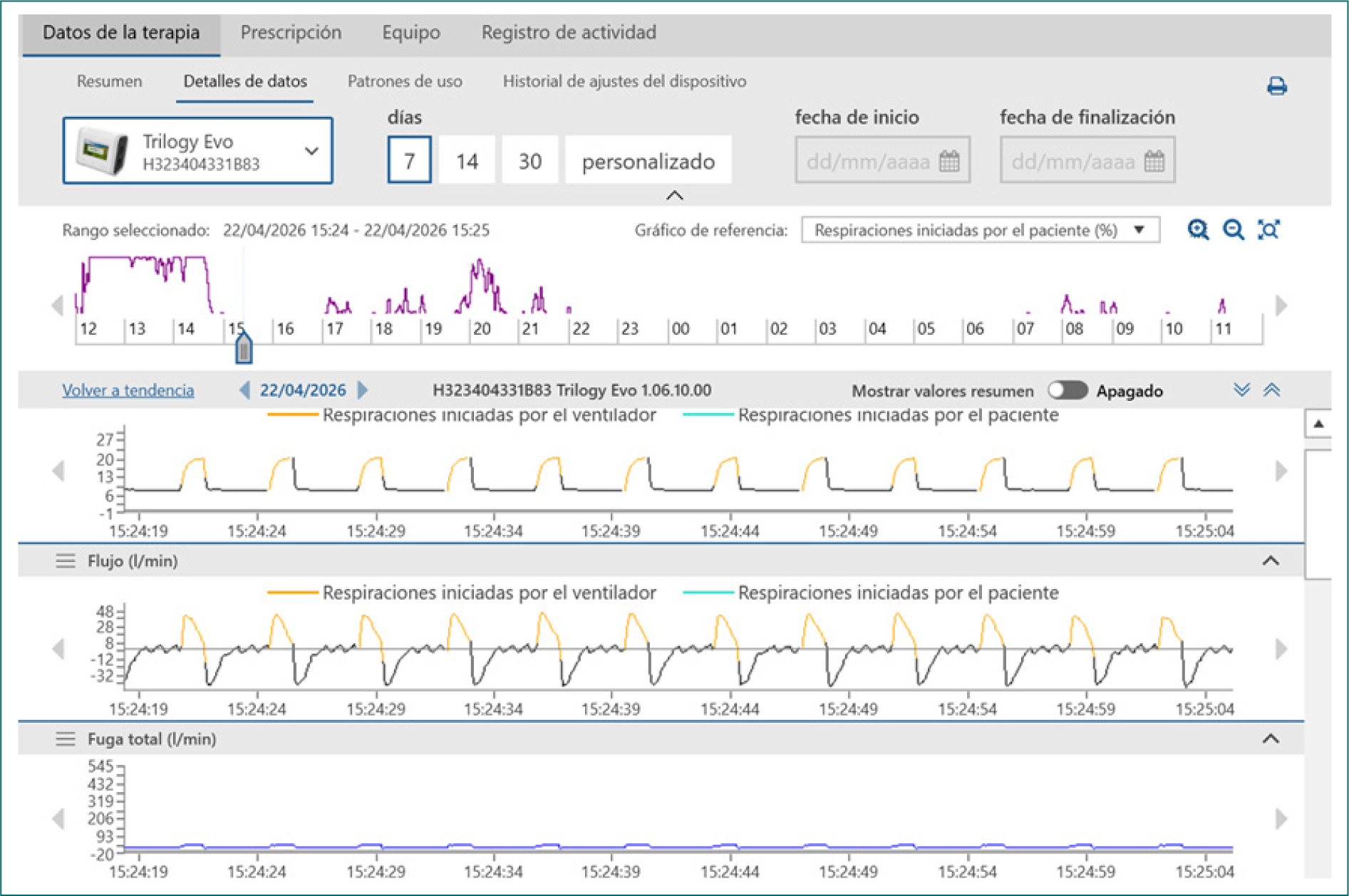
Figure 4. Dissociation between the patient’s actual respiratory rate and that shown by the ventilator. This is a neuromuscular patient with no real capacity for autonomous breathing, with complete ventilator dependence. In the upper image, it can be observed that during daytime periods the patient triggers almost 100% of inspirations (“assisted” breaths), whilst at night the ventilator remains at the back-up rate (0% assisted breaths, all controlled). On detailed review of the ventilator record, it was found that with a flow trigger of 5 L/min, the effect of the cardiac beat (cardiobalistic effect) on respiratory flow was triggering the ventilator at a high rate; this was corrected by increasing the trigger sensitivity to 7 L/min.
AHI: the estimation varies between manufacturers in terms of event definition and detection algorithms. A threshold of 10 events/h has good sensitivity and specificity for identifying patients who require further adjustment.9,10
Inspiratory time (Ti) and I:E ratio: relevant for adjusting cycling criteria (Ti min, Ti max) and identifying I:E ratio inversions.
A critical aspect is that BIS parameters should not be interpreted in isolation, but rather integrated with the clinical history, arterial (or arteriolarised capillary) blood gas analysis, nocturnal pulse oximetry, and, when available, transcutaneous capnography. The SomnoNIV group has proposed a stepwise analysis algorithm that begins with a review of ventilator settings and adherence, continues with leak analysis, and concludes with a detailed examination of pressure and flow waveforms to detect asynchronies and residual respiratory events.11,12
Software platforms and their heterogeneity
Each manufacturer has developed its own software platform, generating considerable heterogeneity in the way data are presented: some express leaks as unintentional only (subtracting estimated intentional leaks according to mask type), whilst others present total leaks; “acceptable” leak thresholds differ and lack universal clinical validation; signal sampling frequency varies, which affects the detection of brief events such as ineffective efforts. This lack of standardization hinders comparison between devices and the adoption of homogeneous telemonitoring systems by respiratory medicine units.
Clinical use of BIS
Long-term NIV follow-up: from hospital to home
Historically, follow-up of HMV patients was performed through elective overnight hospital admissions, during which morning blood gas analysis, nocturnal pulse oximetry, and, in better-equipped centers, transcutaneous capnography or polysomnography were performed. The exponential increase in the number of HMV patients has rendered this model logistically, economically, and humanly unsustainable in many healthcare systems.
BIS allows a substantial portion of that information to be transferred to the home setting. Several studies have demonstrated that the combination of ventilator software data with nocturnal transcutaneous capnography provides the most accurate non-invasive strategy for detecting inadequate NIV. In the work of Georges et al.,13 four monitoring strategies were evaluated in 100 patients; the BIS + TcPCO2 combination showed high agreement with more complex tools, and was markedly superior to the classic strategies of continuous nocturnal SpO2 or morning blood gas analysis. Furthermore, the SpO2 and morning blood gas strategy classified 53% of patients as correctly ventilated, when only 29% were according to the reference standard.
The assessment of adherence is the most well-established use of BIS. NIV is considered insufficient when use is < 3.5–5 h/night, although the optimal threshold varies according to the underlying condition. In COPD, a meta-analysis by Struik et al.14 suggests that at least 5 h/day are necessary to reduce PaCO2. In NMD, the relationship between adherence and survival is well documented. Borel et al. described a “U-shaped” relationship between adherence and prognosis in obese COPD patients: both very low use (insufficient benefit) and very high use (greater ventilatory dependence) are associated with worse prognosis.15 The graphical pattern of use – visible in the daily BIS records – can reveal repeated nocturnal fragmentation suggesting symptomatic leaks, asynchronies, comorbidities (nocturia, pain), or simply poor interface tolerance. Our group and others have demonstrated this trend of greater severity and worse prognosis as ventilator use increases in patients with amyotrophic lateral sclerosis (ALS).16
The detection of significant leaks is another key indication. Unintentional leaks above the 95th percentile are the most relevant for subjective discomfort and sleep fragmentation, whilst the mean or median leak correlates better with the impact on nocturnal hypoventilation. Pasquina et al.,17 in 150 patients on home HMV, demonstrated that leaks were significantly lower with full-face masks than with nasal masks, and were associated with age but not with pressure levels or back-up rate.
NIV initiation guided by BIS
In addition to chronic follow-up, BIS has demonstrated utility in the initiation phase. Home monitoring based on the ventilator BIS combined with nocturnal oximetry and capnography allows NIV titration equivalent to that performed by polysomnography in a sleep laboratory, at lower cost and without the need for hospitalisation. Home initiation with telemonitoring can be as effective as hospital-based initiation and may reduce healthcare costs. A recent pediatric study18 in infants with severe OSA demonstrated that CPAP titration based on BIS analysis over 2-3 nights of hospitalisation (without supervised polysomnography) provided home nocturnal blood gas results equivalent to those of sleep laboratory titration, with greater adherence due to a greater number of therapeutic education sessions.
Similarly, in adults with OSA, BIS with remote transmission can allow home CPAP titration with a diagnostic accuracy of 97.5% compared with conventional respiratory polygraphy, eliminating the need for at least two in-person visits to the sleep laboratory.19
Predictive use: early detection of exacerbations
One of the most novel and promising applications of BIS is its capacity to anticipate COPD exacerbations before they become clinically manifest. In the pioneering work of Borel et al.,20 day-to-day variations in respiratory rate and percentage of patient-triggered cycles were independent predictors of exacerbation. Both parameters began to increase 3–7 days before the clinical onset of the exacerbation, which would theoretically allow early intervention. The percentage of daily NIV use also showed a trend, although this did not reach statistical significance.
Similar results were reported by Blouet et al.,21 who observed changes in the breathing pattern recorded by BIS in the days preceding hospital admission for COPD exacerbation. Respiratory rate emerges in both studies as the most robust and reproducible parameter for predicting exacerbations. However, both studies are exploratory in nature, with small samples and short follow-up, and the results require confirmation in multicenter randomised studies before they can be applied routinely.
In patients with ALS, ventilator software findings have also been shown to allow assessment of the prognosis of respiratory involvement. Specifically, the persistence of obstructive events and increasing ventilator dependence are markers of poor prognosis.16,22
Detection of patient-ventilator asynchronies (PVA)
PVA are common in chronic NIV and can compromise treatment efficacy, alter sleep architecture, and reduce quality of life.11 BIS allows detection of the most prevalent types of PVA through breath-by-breath analysis of pressure and flow waveforms. The SomnoNIV group has proposed a systematic classification framework distinguishing frequency asynchronies (double triggering, autotriggering, ineffective efforts) and intra-cycle asynchronies (flow asynchrony, premature or delayed cycling).
The recommended analysis sequence begins with correction of leaks – the main cause of PVA – continues with evaluation of the upper airway obstruction pattern, and concludes with the identification of residual asynchronies. The clinical relevance of PVA in the absence of discomfort and nocturnal hypoventilation remains debated, but evidence exists for their relationship with subjective sleep quality and with deventilation dyspnea.23
Limitations of BIS
Reliability of leak estimation
Leaks represent the principal limitation of BIS because they affect the reliability of almost all other derived parameters. The ventilator measures the total flow generated by the turbine and applies proprietary algorithms to estimate what fraction corresponds to the patient and what fraction to leaks. However, this process is susceptible to systematic errors in several circumstances:8,24
– Asymmetric leaks (inspiratory > expiratory or vice versa): inspiratory leaks lead to overestimation of patient flow and, consequently, underestimation of leaks, whilst expiratory leaks produce the opposite effect. In detailed waveforms, expiratory leaks manifest as expiratory flow falling below zero, simulating an air-trapping pattern.
Variable and unpredictable leaks: unlike intentional leaks – which follow predictable flow-pressure curves according to mask type – unintentional leaks are intermittent and difficult to quantify precisely.
– Inter-manufacturer disparity: the way each manufacturer reports leaks (unintentional only, total, mean over the entire cycle, expiratory only) generates clinical confusion. The “acceptable” leak thresholds proposed by manufacturers (e.g. 24 L/min) are arbitrary and reflect the performance of older turbines, even being derived from CPAP modes.
– Impact on Vt and MV: in hybrid “volume-targeted” modes (AVAPS, iVAPS), overestimation of Vt can induce the device to reduce inspiratory pressure support unnecessarily, with a consequent risk of persistent hypoventilation.
From a practical standpoint, the SomnoNIV group recommends interpreting leaks by considering the median (impact on hypoventilation correction) and the 95th percentile (more relevant for subjective discomfort and sleep fragmentation). There is no universally applicable leak threshold: clinical relevance should be judged according to the impact on patient-ventilator synchrony, nocturnal desaturation, and correction of hypercapnia.
Reliability of the AHI
The AHI provided by BIS is one of the parameters of greatest clinical interest, but also one of the most debated in terms of reliability. The main problems are:
Variable definition of hypopnea according to manufacturer: the definitions used by different algorithms differ from the American Academy of Sleep Medicine criteria and from each other, such that the same respiratory event may or may not be classified as a hypopnea depending on the device used.
Impact of leaks: in the presence of significant leaks, the flow recorded by the software does not faithfully represent the patient’s actual flow, which can lead to both overestimation (autotriggering, double triggering counted as normal cycles) and underestimation of the AHI.
Inter-manufacturer differences: Georges et al., demonstrated that the AHI from the ResMed ventilator was sufficiently accurate to discriminate patients with AHI > 10/h in OHS, with a cut-off value of 7.2/h achieving a sensitivity of 93% and specificity of 92%. However, a subsequent study with the Philips-Respironics A40 device found systematic underestimation of AHI compared with conventional polygraphy, demonstrating that results are not interchangeable between brands.
Central versus obstructive classification: the algorithmic differentiation between central and obstructive apneas is based on analysis of flow morphology or forced oscillation techniques. Its validation remains very limited and may be distorted in situations of leaks, ineffective cycles, high back-up rates, etc.
In practical terms, the BIS AHI should be interpreted as a screening tool: a value < 10/h in the absence of significant leaks and with good adherence suggests that an additional polygraphy study is not urgently required. Higher values or discordance with the clinical picture should lead to detailed waveform analysis and, if appropriate, performance of a polygraphy or polysomnography under NIV.
In this regard, the principal limitation of BIS is the absence of information on patient effort.25 Some manufacturers incorporate thoraco-abdominal effort belts that can transform a ventilator into a genuine polygraph.
Other relevant limitations
Beyond leaks and AHI, there are other limitations of which the clinician should be aware:
Absence of sleep information: BIS does not provide electroencephalography data, sleep architecture, or arousal information. A patient may have leaks, frequent asynchronies, and profoundly fragmented sleep with an apparently acceptable SpO2. Polysomnography remains essential when severe impairment of sleep quality is suspected.
Poor subjective assessment26: studies comparing the objective efficacy of NIV with the patient’s subjective perception demonstrate poor correlation. Patients with inadequate NIV (residual hypoventilation, leaks, asynchronies) may report satisfactory sleep, and vice versa. Subjective assessment using specific questionnaires (S3-NIV, SRI) should complement, not replace, BIS analysis.
Pediatric populations: the software is designed for adults. In young children, statistical thresholds, breathing patterns, and the minimum duration of events differ significantly. A 10-s event (the usual threshold for defining apnea) does not carry the same significance in an infant as in an adult. The minimum event duration should be adapted to pediatric age. Contradictory evidence exists in this regard, but some authors warn of the difficulty of event detection particularly in younger patients.27–30
Incomplete access to configuration parameters: not all software packages display all ventilator settings (inspiratory and expiratory trigger sensitivity, Ti min and Ti max, ramp). The absence of a log of setting modifications hinders longitudinal follow-up, particularly when the patient is seen at multiple centers.
Telemonitoring: integration and comparison with BIS
From BIS to the cloud: telemonitoring platforms
Telemonitoring of NIV is the logical extension of BIS: rather than requiring the patient to attend the center or the professional to visit the home in order to download data, these are transmitted automatically – generally once per day – to cloud platforms accessible by the clinical team via secure access. The main platforms available in Europe include AirView® (ResMed), EncoreAnywhere® and Care Orchestrator® (Philips Respironics), e-Servicing Eove® (EOVE), Everywhere® (Breas), and Prisma CLOUD® (Löwenstein Medical). Their functionalities differ: some allow only visualization of a daily parameter summary, others offer raw data download and detailed waveforms, and the most advanced allow remote modification of ventilator parameters (inspiratory pressure support, EPAP, back-up rate).
Data transmission is carried out via Wi-Fi or 3G/4G connection integrated into the ventilator or through external modules. An important point is that data are usually transmitted once per day when the ventilator is not in use, which prevents real-time monitoring but allows early warning of clinically relevant changes.4
Alert systems and remote adjustment
Most telemonitoring platforms include an alert system based on predefined thresholds for leaks, AHI, and adherence (traffic light system: green, amber, red). However, these systems are based on arbitrary criteria and their specificity is limited: the risk of generating too many alerts without clinical relevance (red lights not corresponding to actual clinical deterioration) may lead to clinician fatigue and inattention to genuinely important signals. A more sophisticated alert system integrating multiple BIS parameters with clinical and contextual information is still under development.
The possibility of remotely adjusting ventilator parameters (tele-titration) is one of the most significant advances. It allows progressive changes in pressure, back-up rate, or support level without the need for travel, which can improve tolerance and adherence, particularly in the 1st weeks after initiation. Nevertheless, this capability requires careful training of the clinical team and clear safety protocols to avoid inappropriate adjustments.
Evidence of clinical benefit from telemonitoring
Despite the enthusiasm generated by telemonitoring, the evidence of clinical benefit in terms of reducing hospitalizations or improving survival in COPD remains limited. Most randomised trials conducted with telemonitoring in COPD (without NIV) have not demonstrated a reduction in admissions. In HMV patients, studies have been conducted primarily in ALS, where telemonitoring has shown a reduction in healthcare resource use and costs in observational studies and in at least one controlled trial.31
In patients with NMD and restrictive thoracic diseases, home initiation of NIV with telemonitoring support has been shown to be as effective as hospital-based initiation and at a lower cost.32 Several multicenter randomised trials are underway to determine the impact of NIV telemonitoring on hospitalisation rates in severe COPD.
BIS versus telemonitoring: complementary or alternative tools?
BIS and telemonitoring are not alternative but complementary tools. BIS provides the data; telemonitoring makes them accessible in near real time and adds the capacity for remote intervention. The most relevant comparison in clinical practice is not “BIS versus telemonitoring” but rather “a follow-up strategy based on periodically downloaded BIS data vs. a continuous follow-up strategy with a telemonitoring platform.” The latter allows closer monitoring (especially in the initiation phase), but requires greater investment in infrastructure and training, and generates a greater data burden for the clinical team. The optimal strategy probably varies according to the underlying condition, the patient’s clinical stability, and available resources.
What should we expect from ideal software?
Khirani and Arnal33 have recently published a systematic review of the shortcomings of current BIS and the functionalities that ideal software should incorporate. Following their proposal and complementing it with the perspective of the SomnoNIV group and routine clinical practice, the requirements for ideal BIS could be organized into five main areas.
Full access to settings and alarms
The software should display all ventilator configuration parameters: inspiratory and expiratory trigger sensitivity, cycling criteria, Ti min, Ti max, ascending (start) and descending (disconnection) ramp, auto-titration or volume-target modes, and any additional activated options. The presence of an active ascending ramp, for example, can induce persistent hypoventilation and is a common cause of apparent NIV failure that is only detected if the software displays it explicitly. Likewise, alarm settings are critical in highly dependent patients and should be visible and modifiable from the software.
Enhanced statistics and customisable thresholds
Statistics should include: total and unintentional leaks (both, for complete context); Ti statistics (mean, median, percentiles) to adjust Ti max; percentage of patient-triggered and -cycled cycles (both with breath-by-breath graphical representation in some devices); and trend charts with adjustable time windows (7 days, 1 month, 6 months). The adherence threshold of 4 h/day is arbitrary and should be customizable according to the therapeutic goals of each case, particularly in pediatrics. The integration of data from multiple devices used by the same patient into a single unified folder would also be very useful.
Advanced waveform visualizarían
Analysis of detailed waveforms is the core of advanced clinical BIS. The ideal software should allow: simultaneous visualization of at least three signals (pressure, flow, leaks, with the possibility of adding SpO2, PtcCO2, or belts); differentiated identification (colour coding or other marker) of patient-triggered and cycled cycles versus ventilator-triggered cycles; two moveable vertical cursors for measuring time intervals (useful for calculating Ti or quantifying asynchronies); user-configurable Y-axis scale; rapid 2–3 min zoom windows (especially necessary in pediatrics); and continuous pressure visualization even when patient flow is not adequately detected by the device.
Analysis and correction tools
The ideal BIS should incorporate: the ability to deselect recording periods (artefacts, documented awakening) with automatic recalculation of statistics; manual scoring or reclassification of events (e.g. reclassifying an obstructive event as central); scoring of asynchrony types with derived statistics; integration of SpO2 desaturation to link respiratory events with their oximetric consequences; and a patient self-assessment widget (perceived sleep quality, adverse effects) downloadable alongside ventilator data.
Only one manufacturer (ResMed) stores data in an open format (EDF, European Data Format) that allows export to polygraphy or polysomnography reading systems. Ideally, the adoption of export tools in a common language – such as this software – would facilitate the “manual correction” of events as if from a polygraph. Some open-source solutions (https://www.sleepfiles.com/OSCAR/) allow cross-platform access but with limitations in data export capability.
Integration of additional signals
Transcutaneous capnography (PtcCO2) is the additional signal of highest priority. At present, only one manufacturer integrates the PtcCO2 signal directly into the BIS platform. Its widespread incorporation would allow correlation of PtcCO2 variations with episodes of leaks, flow reductions, and desaturations, and would enable precise evaluation of nocturnal hypoventilation correction without the need for an additional external capnograph. Thoraco-abdominal belts, already available in at least one device, allow distinction between events with and without respiratory effort, which is fundamental for differentiating central from obstructive apneas and for characterizing asynchronies with greater rigor.
New horizons: AI, big data, and standardization
AI and predictive algorithms
The availability of large volumes of longitudinal data generated by home ventilators – respiratory rate, AHI, leaks, adherence, SpO2 – constitutes fertile ground for the development of AI models capable of identifying predictive patterns of clinical events. In the field of CPAP for OSA, Liu et al.34 used telemonitoring data from thousands of patients to identify trajectories of emergent central apnea following CPAP initiation (transient, persistent, de novo emergent), with direct therapeutic implications. Similar analyses with HMV in chronic hypercapnic diseases would allow the identification of responder and non-responder phenotypes, predictors of hospitalisation, and markers of disease progression.
However, the clinical application of these AI models faces important challenges: the variability of each manufacturer’s proprietary algorithms affects the quality and comparability of input signals; inconsistent event labeling (supervised) limits model generalization; and model results must be correlated with relevant clinical outcomes (survival, quality of life, hospitalizations) before implementation. The stratified approach proposed by the SomnoNIV group – linking leaks with asynchronies and, in turn, with clinical events – does not easily adapt to current AI algorithms, which tend to identify correlations without an underlying pathophysiological mechanism.
Big data and analysis of large cohorts
The analysis of “big data” from telemonitoring of thousands or millions of patients treated with CPAP or NIV has already generated relevant knowledge on adherence trajectories, the impact of interface changes, and variations in use during exceptional circumstances (such as the COVID-19 lockdown, during which CPAP adherence increased significantly in several countries). This epidemiological approach complements – and occasionally surpasses in statistical power – randomised clinical trials, although it cannot establish causality. In HMV, the systematic exploitation of these data is still in its early stages, but its potential for describing phenotypes, identifying risk factors for failure, and generating hypotheses for controlled trials is enormous.
Standardization and interoperability
One of the greatest limitations of the current BIS ecosystem is fragmentation: each manufacturer has its own platform, its own way of expressing leaks, its own event detection algorithms, and its own data format. This hinders the adoption of homogeneous follow-up protocols, the conduct of comparative studies, and the development of AI systems trained on data from multiple manufacturers. The creation of open data exchange standards (such as the aforementioned EDF format) for HMV would be a fundamental step towards interoperability. European initiatives such as the general data protection regulation establish the legal framework for managing these data, but technical harmonization remains far from achieved.
From a regulatory perspective, the recognition of telemonitoring as a reimbursable medical act (as has been done in France for chronic respiratory failure in HMV) with specific requirements (informed consent, minimum recorded parameters, the physician’s obligation to review alerts and establish an action plan) is a model exportable to other healthcare systems. This framework establishes the basis for responsible implementation, with patient participation in therapeutic education programs and economic recognition of the work of the professionals involved in remote follow-up.
Integration with biomarkers and wearables
In a more distant horizon, the integration of BIS with other wearable devices measuring physical activity, heart rate variability, body temperature, or daytime SpO2 levels could provide a more complete picture of the patient’s clinical status. The combination of continuous physiological markers could improve the precision of predictive models for exacerbation or decompensation, reducing both false negatives (serious events not detected) and false positives (unnecessary alerts generating alarm and consuming resources).
Proposed practical monitoring strategy based on BIS
Integrating the available evidence, the SomnoNIV group and other scientific societies propose a stepwise approach to the follow-up of HMV patients. Adapted to routine clinical practice and the resources of the Spanish healthcare system, the strategy could be structured into the following stages:
– Step 1. Clinical and technical verification: check that the ventilator settings correspond to the prescription, that the ascending ramp is deactivated (or correctly indicated), that the interface is appropriate, and that the patient has received adequate therapeutic education.
– Step 2. Review of summary statistics: analyse adherence (duration and pattern), leaks (mean/median and 95th percentile), Vt and MV, percentage of spontaneous cycles, and AHI. Patients with adherence ≥ 4 h/night, low leaks, Vt in the expected range (6–10 mL/kg), AHI < 10/h, and normal blood gas analysis and nocturnal SpO2 do not require urgent further analysis.
– Step 3. Analysis of detailed waveforms: in all patients, even briefly, to detect patterns of airway obstruction, intermittent flow reductions, asynchronies, and correlation with desaturations. This is particularly important when there is discordance between BIS data and the clinical situation.
– Step 4. Nocturnal transcutaneous capnography: in patients with low Vt, elevated leaks, elevated AHI, altered nocturnal SpO2, or clinical features suggestive of residual hypoventilation. The BIS + TcPCO2 strategy is the most accurate non-invasive combination for detecting inadequate NIV.
– Step 5. Polygraphy or polysomnography under NIV: reserved for complex cases: unresolved asynchronies, suspected upper airway obstruction, clinico-functional discordance, or the need to characterise sleep architecture.
This algorithm, originally proposed by the SomnoNIV group and recently updated, can be adapted to resource availability (capnography, polygraphy) and to the severity and underlying condition of each patient. Active telemonitoring can replace or complement periodic visits, particularly in the initiation phase and in patients at high risk of decompensation.
Conclusion
The BIS of home ventilators has transformed the monitoring of HMV, enabling information previously obtainable only in a hospital to be transferred to the home setting. Its utility is well documented for the assessment of adherence, the detection of leaks, the analysis of PVA, and, combined with transcutaneous capnography, for the evaluation of overall NIV efficacy. The predictive uses of BIS – particularly the early detection of COPD exacerbations through monitoring of respiratory rate and percentage of spontaneous cycles – are promising but require prospective validation in larger samples.
The main limitations of current BIS lie in the estimation of leaks – which conditions the reliability of almost all other parameters – and in the variability of AHI according to manufacturer and detection algorithms. The lack of standardization between platforms is a relevant barrier to large-scale telemonitoring and to the development of generalizable AI models.
The ideal software should offer full access to all ventilator settings and alarms, detailed statistics with customizable thresholds, simultaneous visualization of multiple signals with advanced analysis tools, and integration of additional signals such as transcutaneous capnography and thoraco-abdominal belts. The standardization of data formats and the development of regulatory frameworks recognising telemonitoring as a reimbursable medical act are necessary steps to consolidate these technologies in routine clinical practice.
Ultimately, BIS is not an end in itself, but a means of optimising NIV in the home setting, reducing the burden of hospital follow-up, and, ultimately, improving clinical outcomes and quality of life for patients with chronic respiratory failure.
Funding
None.
Conflicts of interest
None.
Ethical considerations
Protection of human subjects and animals. The authors declare that no experiments on humans or animals were performed for this research.
Confidentiality, informed consent, and ethical approval. This study does not involve personal patient data, medical records, or biological samples, and does not require ethical approval. SAGER guidelines do not apply.
Declaration on the use of artificial intelligence. The authors declare that no generative artificial intelligence was used in the writing or creation of the content of this manuscript.
